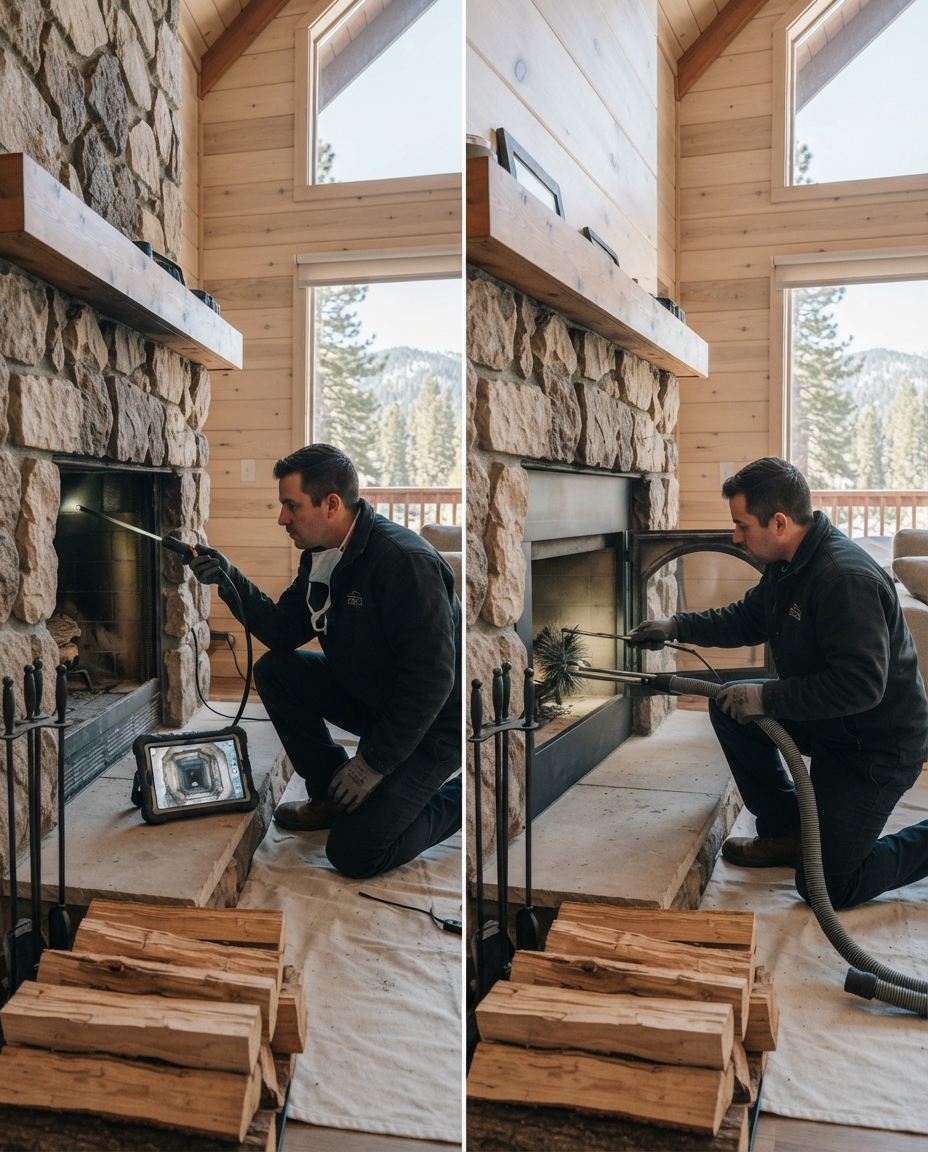
Chimney Cleaning vs. Inspection: What's the Difference?
Understanding the Difference Between Chimney Cleaning and Inspection
Both Services Play Important Roles in Fireplace Safety
Preparing your fireplace for regular use involves more than simply lighting a fire. Two important parts of chimney maintenance are chimney cleaning and chimney inspection. Although these services are often mentioned together, they serve different purposes.
Cleaning focuses on removing accumulated substances from the chimney, while an inspection evaluates the condition of the chimney and fireplace system. Understanding the difference can help homeowners make informed decisions about seasonal fireplace maintenance.
What Is Chimney Cleaning?
Chimney cleaning, often called chimney sweeping, is the process of removing accumulated soot, creosote, and other debris from the chimney.
When wood burns, combustion byproducts can travel through the chimney. Over time, deposits may accumulate along the flue.
A professional chimney cleaning can help remove buildup and keep the chimney passage clearer.
Cleaning may be especially important when:
The fireplace is used regularly.
Creosote buildup is present.
The chimney has not been cleaned in an extended period.
A professional recommends cleaning based on the chimney's condition.
The appropriate cleaning frequency depends on fireplace usage, fuel type, and other factors.
What Is a Chimney Inspection?
A chimney inspection is different because its primary purpose is to evaluate the condition of the chimney and fireplace system.
An inspection may look for visible or accessible concerns involving:
The chimney structure
Flue components
Masonry
Chimney cap
Flashing
Firebox
Other accessible components
The level of inspection needed can depend on the chimney's condition, history, and whether changes have been made to the system.
Cleaning Doesn't Replace an Inspection
A chimney can be clean while still having structural or maintenance concerns.
For example, cleaning may remove soot and creosote, but it doesn't necessarily identify every issue involving masonry, flashing, the chimney cap, or other components.
That's why chimney cleaning and inspection should be viewed as complementary services rather than interchangeable ones.
Inspection Doesn't Replace Cleaning
The reverse is also true.
An inspection can identify conditions that may require cleaning, but an inspection itself doesn't automatically remove accumulated soot or creosote.
If cleaning is recommended, it should be performed separately as part of the chimney's maintenance plan.
Why Both Services Matter
Your chimney performs an important role in venting fireplace combustion products outside the home.
Maintaining the system involves both understanding its condition and keeping it appropriately maintained.
Combining appropriate inspections and cleaning can help homeowners:
Monitor chimney condition
Identify potential maintenance concerns
Remove accumulated deposits
Maintain the fireplace system
Prepare for regular seasonal use
When Should You Have Your Chimney Inspected?
A chimney inspection may be appropriate when:
You're preparing for fireplace season.
You recently purchased a home.
The chimney has been unused for an extended period.
You notice visible damage.
You experience unusual odors or sounds.
The fireplace isn't performing as expected.
You have concerns about the chimney's condition.
A qualified professional can determine what level of inspection is appropriate for your situation.
When Should You Have Your Chimney Cleaned?
Cleaning needs vary from one fireplace to another.
Factors that can influence cleaning frequency include:
How often you use the fireplace
What type of fuel you burn
How efficiently the fireplace operates
The amount of creosote produced
Previous cleaning history
If you're unsure whether your chimney needs cleaning, a professional can evaluate the system and provide a recommendation.
Seasonal Homes Need Attention Too
Vacation cabins and seasonal properties shouldn't be overlooked simply because they're used less frequently.
A chimney can still be affected by:
Moisture
Debris
Animal activity
Weather exposure
Aging components
Before using a fireplace at a seasonal property, consider whether an inspection or cleaning is appropriate.
Don't Wait Until the First Cold Night
Late summer and early fall are convenient times to think about chimney maintenance.
Waiting until temperatures drop can make it harder to schedule service when many homeowners are preparing their fireplaces at the same time.
Taking care of inspections and cleaning ahead of the season provides more time to address any concerns that may be discovered.
Watch for Signs Your Chimney Needs Attention
Homeowners should pay attention to changes in fireplace performance or visible chimney conditions.
Potential warning signs include:
Unusual odors
Excessive smoke
Poor draft
Visible masonry damage
Damaged chimney caps
Signs of water intrusion
Unusual sounds from the chimney
These signs don't necessarily identify a specific problem, but they are good reasons to have the system evaluated by a qualified professional.
Professional Maintenance Provides Peace of Mind
Chimney systems can contain components that aren't easy for homeowners to evaluate safely or thoroughly.
Professional chimney services provide the equipment and experience needed to inspect and clean accessible components appropriately.
Homeowners should avoid climbing onto roofs or attempting repairs if they don't have the proper training and safety equipment.
Final Thoughts
Chimney cleaning and chimney inspection are two different services, but both can play important roles in responsible fireplace maintenance.
Cleaning removes accumulated soot, creosote, and debris, while inspection focuses on evaluating the condition of the chimney and fireplace system.
Understanding the difference helps homeowners avoid assuming that one service automatically replaces the other. Before fireplace season begins, consider having your chimney professionally evaluated to determine whether cleaning, inspection, repairs, or other maintenance are appropriate.
A clean chimney is important—but knowing the condition of the entire system matters too.
